
Case IH Warning Lights and Symbols
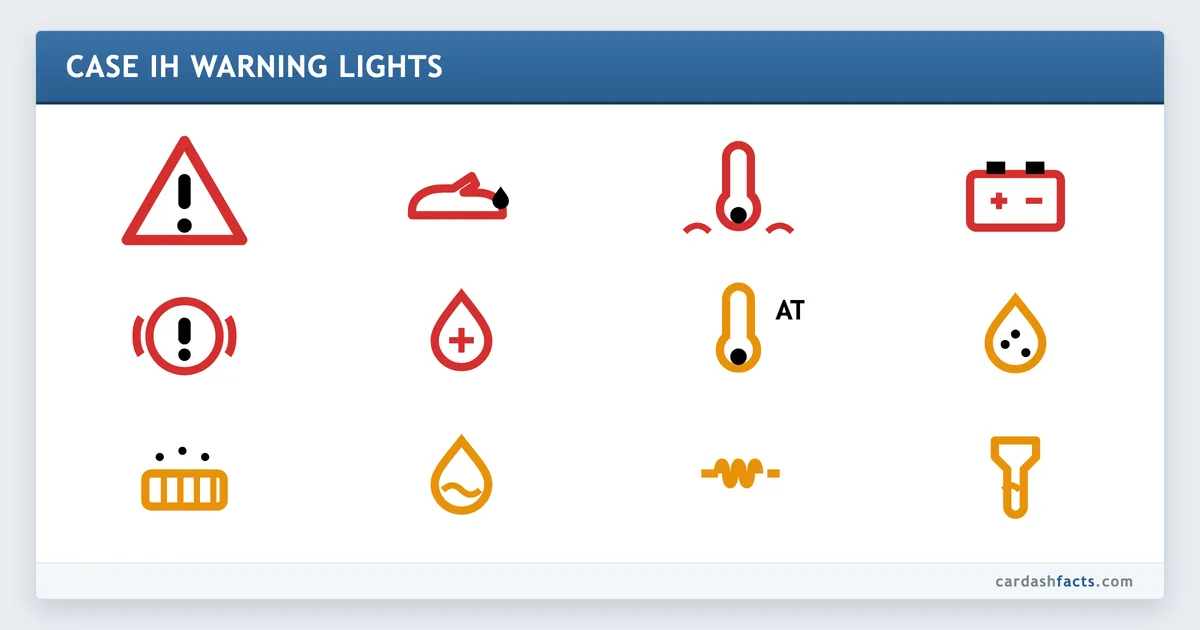
| Light colors | Red (stop now), Amber (service soon), Green/Blue (active/info) |
|---|---|
| Most urgent red lights | Engine oil pressure, coolant temperature, brake system, hydraulic pressure |
| Common amber lights | DPF regen required, low fuel, water in fuel, air filter restriction, DEF/AdBlue level |
| If a red light shows | Stop safely, shut the engine down, do not continue operating |
| Series covered | Magnum, Puma, Maxxum, Farmall, Steiger (instrument cluster layout varies by series) |
Case IH tractors use a color-coded telltale system across the Magnum, Puma, Maxxum, and Farmall lines: red lights require you to stop the machine immediately, amber lights mean something needs attention soon, and green or blue indicators confirm a system is active or engaged. When a light comes on, check the color first - that tells you how fast you need to react.
The table below lists the most common Case IH dashboard symbols, their severity, and the right next step for each one.
How Case IH color-codes its warning lights
Every warning telltale on a Case IH instrument cluster falls into one of three urgency levels. Red is a stop-level alert - oil pressure gone, coolant boiling, brake circuit low. These require you to pull to a safe spot and shut down immediately. Continuing to run through a red light typically causes the kind of damage that ends up being a very expensive repair or a scrapped component.
Amber (sometimes called yellow) lights are caution-level. The machine can often keep running for a short time, but something needs to be checked and corrected before the situation gets worse. Typical amber items include a clogged air filter, low DEF/AdBlue, or a diesel particulate filter that needs a regeneration cycle. Green and blue indicators are informational - they tell you a system is active (PTO spinning, diff lock engaged, work lights on) rather than flagging a fault.
On older Case IH models like the Maxxum 100 series, warning icons appear in a fixed cluster on the right side of the dash. On the newer Magnum AFS or Puma CVX, the same icons display digitally in the CommandCenter or ArmRest display, sometimes with a brief plain-text description alongside the symbol.
Case IH warning light symbols and what they mean
The symbols below cover the most common telltales across Case IH tractor lines. Color listed is the typical severity; some icons can appear in more than one color depending on the specific fault.
- Stop - Master WarningRed
- Meaning: One or more critical faults are active. The master warning lamp typically lights alongside a specific indicator to draw your attention to a serious condition.Recommended action: Stop the tractor safely. Check which secondary indicator is also lit to identify the specific fault, then address that system before restarting.
- Caution - Master CautionAmber
- Meaning: A non-critical fault is active. The caution lamp flags advisory conditions that need attention but do not require an immediate shutdown.Recommended action: Note the condition, reduce workload if possible, and service the flagged system at the earliest opportunity.
- Engine Oil Pressure LowRed
- Meaning: Engine oil pressure has dropped below the minimum safe threshold. Running the engine without adequate oil pressure causes rapid bearing and crankshaft wear.Recommended action: Stop and shut down immediately. Check oil level on the dipstick. If oil level is correct, do not restart until the cause of the pressure loss is diagnosed - check for a failed oil pump, blocked oil gallery, or serious internal leak.
- Engine Coolant Temperature HighRed
- Meaning: Coolant temperature has exceeded the safe operating limit. Continued operation risks head gasket failure, warped cylinder head, or seized engine components.Recommended action: Pull to a safe stop. Let the engine idle briefly to allow coolant to circulate, then shut down. Once cool, check coolant level, condition of the radiator, and whether the thermostat or fan drive is working correctly.
- Battery / Charging SystemRed
- Meaning: The alternator is not keeping the battery charged. Voltage has fallen below normal operating range while the engine is running.Recommended action: Finish the current pass and park safely. Check belt tension and condition, alternator connections, and the battery itself. Continued operation will eventually cause the tractor to lose power to electronics and shut down.
- Hydraulic Oil Temperature HighRed
- Meaning: Hydraulic fluid temperature is above safe limits. Hot hydraulic oil loses viscosity, accelerates wear on pumps and valves, and can damage seals.Recommended action: Stop working and let the tractor idle with the hydraulics unloaded to allow heat to dissipate. Check hydraulic oil level and the condition of the hydraulic filter. Extended high-load work in hot weather is a common trigger.
- Brake System WarningRed
- Meaning: A fault has been detected in the braking circuit - this can indicate low brake fluid, a hydraulic leak in the brake system, or a brake pressure sensor fault.Recommended action: Do not operate on slopes or at road speed. Park on level ground and inspect brake lines, fluid level in the reservoir, and brake actuation. Have a dealer inspect before returning to field work.
- Transmission Oil Temperature HighAmber
- Meaning: Transmission fluid is running hot. Common causes include sustained heavy draft loads, extended operation in a gear that is too low, or a plugged transmission cooler.Recommended action: Reduce load and allow the tractor to idle. Check transmission oil level once the machine is cooled. If the light comes on repeatedly under normal loads, have the transmission cooler and oil circuit inspected.
- Water in FuelAmber
- Meaning: Water has been detected in the fuel-water separator bowl. Water in the fuel system can damage injectors and the high-pressure fuel pump.Recommended action: Stop at a convenient point and drain the fuel-water separator bowl. If the light returns quickly after draining, inspect the fuel supply for contamination and check tank breathers.
- Fuel Filter RestrictionAmber
- Meaning: The primary or secondary fuel filter is becoming blocked. A restricted fuel filter starves the high-pressure pump and causes power loss or hard starting.Recommended action: Replace the fuel filter as soon as practical. Running a severely blocked filter risks damage to the fuel injection system. Check filter change intervals - Case IH typically specifies 500-hour replacement on Tier 4 engines.
- Air Filter RestrictionAmber
- Meaning: The air intake restriction indicator shows the air cleaner element is becoming blocked. A restricted air supply causes black smoke, power loss, and elevated exhaust temperatures.Recommended action: Service the air cleaner element. Tap or blow out the primary element if conditions allow; replace if the light returns after cleaning. Check the pre-cleaner and intake path for obstructions.
- DEF / AdBlue Level LowAmber
- Meaning: The Diesel Exhaust Fluid tank is running low. Case IH Tier 4 Final engines (Magnum, Puma, Maxxum 2014 onward) use SCR technology and require DEF to meet emissions standards. If DEF runs out, the engine will derate to around 25-40% power.Recommended action: Refill the DEF tank with ISO 22241-compliant fluid as soon as possible. Use only clean DEF - contaminated or diluted fluid causes SCR catalyst faults that require dealer reset. Keep a spare container on the tractor.
- DPF Regeneration RequiredAmber
- Meaning: The diesel particulate filter has accumulated enough soot that it needs a regeneration cycle to burn off the buildup. Passive regen happens automatically during normal field work at adequate load and temperature. This light means passive regen is not keeping up.Recommended action: If the tractor can continue at moderate to high load, passive regeneration may complete on its own. If the light persists or a second, more urgent regen indicator appears, park in a safe open area away from dry vegetation and initiate a stationary active regeneration via the CommandCenter menu. Do not attempt regen near buildings or in an enclosed space.
- Glow Plug / Wait to StartAmber
- Meaning: The pre-heat system is warming the combustion chambers before a cold start. This is a normal function, not a fault. On some Case IH models a separate glow plug fault indicator appears if one or more elements have failed.Recommended action: Wait until this light goes out before cranking the engine. In cold weather, the wait-to-start cycle may take 5-15 seconds. If the light never goes out or the engine cranks poorly in cold conditions, have the glow plugs tested.
- Parking Brake EngagedRed/Green
- Meaning: The parking brake is set. On Case IH models, this indicator is typically red when the brake is on as a reminder not to drive away under load with the brake applied.Recommended action: Release the parking brake before moving the tractor. If the light stays on after releasing, check the parking brake switch and cable or hydraulic actuator, depending on the model.
- PTO EngagedGreen
- Meaning: The rear PTO is currently running. This is an informational indicator confirming the PTO is active and delivering power to an implement.Recommended action: No action needed - this confirms PTO operation. Be aware that implements remain powered even when the tractor is stationary. Disengage before dismounting or approaching the implement.
Red lights that mean stop the machine now
Four red lights on a Case IH instrument cluster should never be ignored or reset and run: engine oil pressure, coolant temperature, hydraulic temperature (when severe), and brake system.
The oil pressure light is the most time-critical. An engine running without oil pressure will sustain catastrophic bearing damage within seconds to minutes. If this light comes on mid-field, the correct response is to pull out of the furrow or row immediately, shut the engine off, and investigate before any restart attempt.
Coolant temperature is the second critical red. Modern Case IH engines - particularly the 6.7L or 8.7L FPT units found in the Magnum and Puma - run tight tolerances. An overheating event that cracks a head or blows a gasket is a major rebuild cost. If the coolant light comes on, a short idle period to equalize temperature before shutdown is acceptable, but do not keep pulling load.
The battery light is less immediately catastrophic, but a tractor in the middle of a field with a dead electrical system is not a simple recovery operation. Finishing the current pass and returning to a workshop is a reasonable response, provided the tractor starts reliably.
What to do when a warning light comes on
The first step is always to identify the color. Red requires stopping, amber allows a short window to finish and park safely.
For amber lights on Tier 4 machines - especially the DEF/AdBlue level warning and DPF regen indicator - understanding the sequence of escalation matters. Case IH designs these systems to give early warnings with plenty of time to act before power derate kicks in. The DEF level light typically comes on with around 10-20% tank capacity remaining, giving you several hours at normal consumption before any derate. Ignore it long enough and the SCR system will step-derate the engine to protect emissions compliance - at that point you need DEF, not a dealer visit.
DPF regen indicators follow a similar escalation. The first amber indicator is advisory. A second, more urgent light (sometimes accompanied by a tone on the CommandCenter) means active regen is needed soon. If that is also ignored, a final red or flashing indicator appears and the engine may derate significantly. The fix at every stage is the same - initiate a stationary regen in a safe location - but acting on the first amber is far easier than dealing with a severely loaded DPF.
For any light you cannot identify clearly from this guide, the operator's manual for your specific Case IH model is the definitive reference. Case IH uses slightly different symbol sets across product generations, and the manual index lists every telltale by name and description.
Frequently Asked Questions
Q: Why does my Case IH tractor have a red exclamation mark light?
A: The red exclamation mark is the master warning or stop lamp. It activates alongside a specific indicator light to signal a critical fault - usually engine oil pressure, coolant temperature, brake system, or a severe hydraulic fault. Check which secondary light is also illuminated to identify the root cause. Stop and shut down before investigating.
Q: What does the amber DPF light mean on a Case IH Puma or Magnum?
A: The amber DPF (diesel particulate filter) light means the filter has accumulated enough soot that it needs a regeneration cycle to clean itself. If you are doing sustained fieldwork at decent engine load, passive regeneration may complete on its own. If the light stays on, park the tractor in a clear, open area - away from dry crops, buildings, or fuel - and use the CommandCenter menu to start a stationary active regen. Do not skip or repeatedly reset this warning; a severely clogged DPF can eventually result in a forced shutdown or an expensive filter replacement.
Q: How long can I run a Case IH tractor after the DEF/AdBlue warning light comes on?
A: The initial DEF level warning on Tier 4 Case IH tractors typically triggers with 10-20% tank capacity left, which usually represents several hours of operation. However, if you continue without refilling, the SCR system will begin power derate - typically stepping down to around 25-40% of rated power. Refill the DEF tank with clean, ISO 22241-compliant fluid. Never add water or any other liquid to the DEF tank, as contamination triggers SCR catalyst faults that require dealer diagnosis and reset.
Q: Can I reset Case IH warning lights myself?
A: Some advisory amber lights clear automatically once the underlying condition is resolved - for example, the water-in-fuel light goes out after you drain the separator, and the glow plug wait-to-start light goes out once pre-heating is complete. Active fault codes stored in the CAN system usually require the fault to be fixed first; they may then self-clear after a key cycle, or require an AMS/dealer service tool reset depending on the specific code. Do not simply reset a warning light without addressing the cause - the issue will return, often worse.